




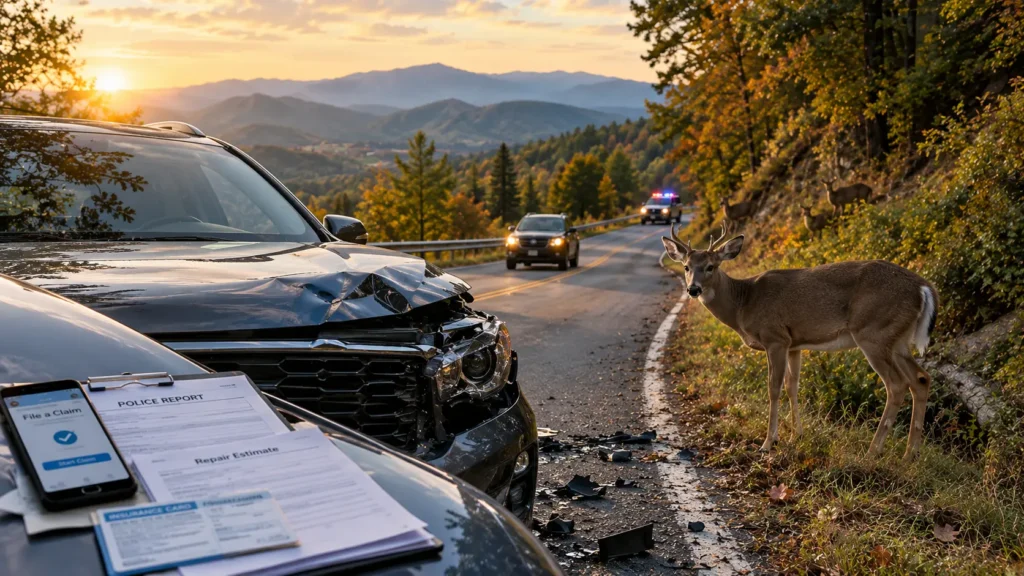
A deer accident in North Georgia is rarely the driver’s fault, and insurance usually decides who pays. Comprehensive insurance usually covers damage to the car, but an accident caused by another driver’s negligence may trigger a personal injury claim. Deer collisions rise sharply each fall across Georgia, including on rural roads near Ellijay and Blue Ridge. Georgia’s Department of Natural Resources reports that the annual number of deer accidents is 50,000. This guide will cover fault, insurance, reporting requirements, motorcycle cases, and legal procedures.
Georgia Deer Season Raises the Risk of Collisions
Georgia deer season corresponds to the fall rut, when male deer pursue female deer across roads unexpectedly. According to the Georgia’s Department of Natural Resources, the mating period runs from October to late December, depending on the area. The DNR rut map shows peak movement dates by county. Dawn and dusk are the riskiest hours. Every deer hit by a car can cause serious injuries, and rural roads add higher speeds and slower emergency response. Our guide to a rural highway accident in North GA explains the added risks.
What To Do If You Hit a Deer
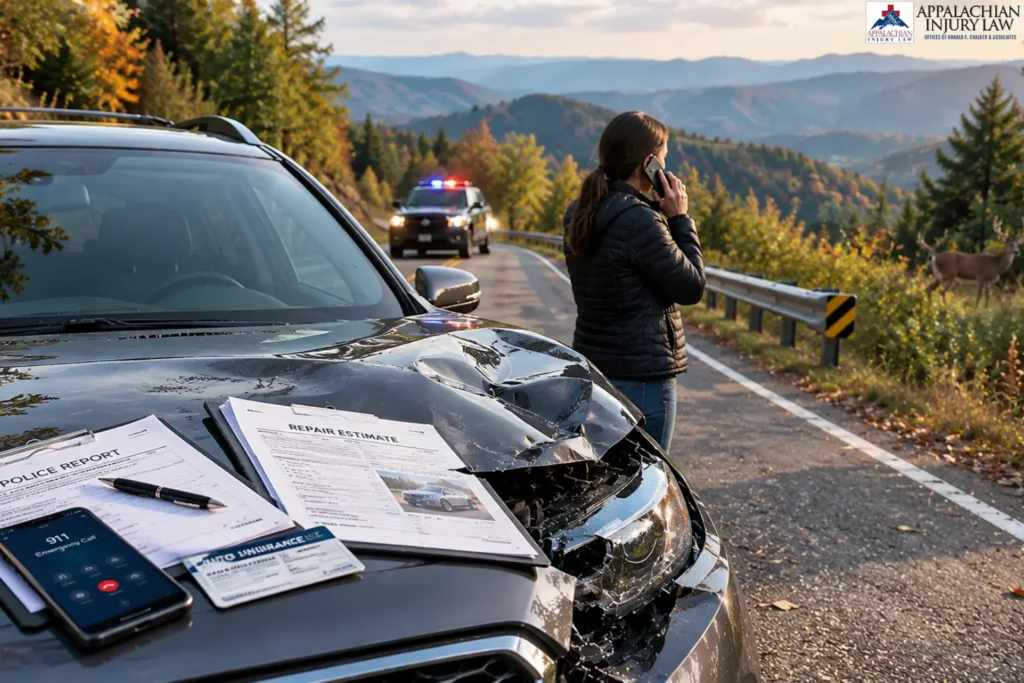
Knowing what to do if you hit a deer protects both your health and your claim.
- Move to a safe spot and turn on hazard lights.
- Stay away from the injured deer.
- Call 911 if anyone is hurt.
- Report the crash to police or the sheriff.
- Photograph the damage and the scene.
- Get medical care, even for minor symptoms.
Georgia law requires reporting injury crashes, and a police report strengthens any insurance claim. Delays in care can weaken a later claim.
Who Is at Fault After Hitting a Deer?
The question is hitting a deer an at fault accident has a simple answer: usually no. A deer is a wild animal, so no driver or owner controls its movement. Fault changes when another driver’s negligence contributes, such as following too closely or driving while impaired. Recent Georgia tort reform also affects how injury claims are valued. The table below compares common scenarios.
| Scenario | Likely Fault | Typical Coverage |
|---|---|---|
| Deer strike, no other vehicle | Usually no one | Your comprehensive coverage |
| Swerve into a tree or ditch | Usually no one | Often collision coverage; review your policy |
| Another driver hits you after the deer | Possibly the other driver | Their liability insurance |
Insurance Coverage for Deer Collisions
A frequent question from Georgia motorists is: Does insurance cover hitting a deer? It will depend upon whether you have comprehensive insurance coverage. Georgia mandates liability coverage but doesn’t mandate comprehensive or collision insurance. Liability insurance does not repair your vehicle, while comprehensive insurance coverage will provide you coverage for any damage due to animal accidents minus your deductible amount. Report the loss promptly and keep repair estimates, photos, and the police report. If another driver caused the crash, speak with an auto accident lawyer about compensation for injuries.
Motorcycle Deer Accident Risks and Safety Tips
A motorcycle deer accident is especially dangerous because riders have no protective vehicle frame. Even a low-speed impact can throw a rider from the bike. Injured riders can review our motorcycle accident attorneys page. Deer safety tips for avoiding a collision apply to every driver and rider:
- Slow down at dawn and dusk.
- Watch for more deer after you see one.
- Use high beams when no traffic is ahead.
- Brake firmly, but do not swerve.
- Skip deer whistles, which lack scientific support.
Protect Your Rights After a Deer Accident
Quick reporting, thorough documentation, and the right insurance coverage decide how well you recover after a deer accident. Fault becomes complicated when another driver, a swerving crash, or a motorcycle injury is involved. Never provide recorded statements to the insurance companies until you know your rights. Early consultation can help avoid making any errors that will reduce your recovery.
Appalachian Injury Law helps injured people in East Ellijay, Gilmer County, and nearby communities understand their options. Our team is always ready to guide you in the process. Call (706) 515-1995 or visit our Contact page to discuss your situation.
Frequently Asked Questions
Do I have to report hitting a deer in Georgia?
Reporting is strongly advised, and the law requires it whenever someone is injured. O.C.G.A. § 40-6-273 mandates a report whenever there is an injury, death, or damage over $500 in a crash. Whether the only damage involved in a crash was a deer determines whether the situation is reportable under the statute. A police report still supports your insurance claim. Call local police, the county sheriff, or the state patrol after the crash.
Can I sue if I hit a deer in Georgia?
You generally cannot sue anyone for simply hitting a deer, because wild deer have no legal owner. However, you may have a case if someone else’s carelessness caused the accident. Some examples of this include tailgating, speeding, and driving under the influence. Georgia fault rules look at each person’s conduct. An attorney can review the facts, the police report, and your insurance coverage to explain your options.
What should I do if a deer causes a crash with another vehicle?
Call 911, and try to relocate to a safer place. Exchange details with the other driver, take some photos of both cars, the road, and any injuries sustained. Keep all repair estimates and medical records. Avoid admitting blame at the scene. Tell your insurer about the crash promptly. Speak with an experienced personal injury attorney before accepting a settlement or giving a recorded statement to any insurance company.
