






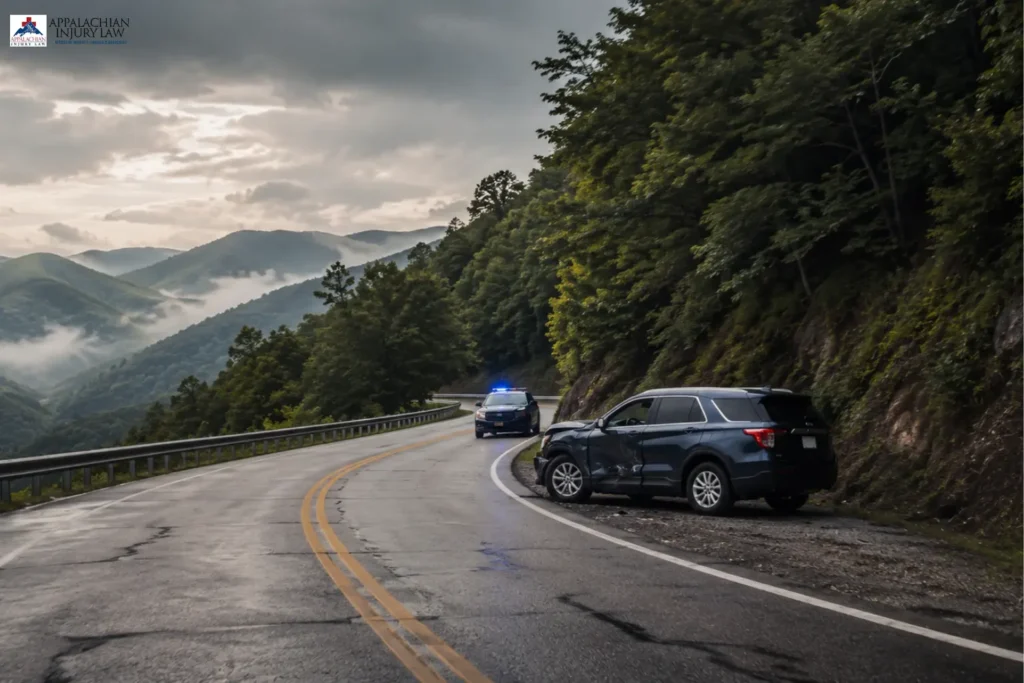
Rural highway crashes in North Georgia require immediate medical care, a police report, and photos of the scene. These wrecks cause more severe injuries than city accidents because of higher speeds and slower emergency response. A crash on a rural road often involves unclear fault and limited witnesses. Appalachian Injury Law has represented North Georgia crash victims from its East Ellijay office for more than 30 years. This guide covers the leading causes of mountain crashes and the steps that protect a claim.
Why Rural Highway Crashes Differ From City Accidents
Rural highways present threats that aren’t present on urban streets. Speed limits on rural highways are higher, shoulder widths are narrower, and lighting is limited. There might be no guardrails, reflective signs, or trauma care facilities on rural highways. It usually takes 20 minutes or more for emergency and medical services to reach the scene of an accident in Gilmer County. That delay raises the risk of severe injury or death. Wildlife crossings, gravel shoulders, and steep drop-offs add further danger. Cell service gaps can also delay 911 calls throughout the North Georgia mountains. NHTSA data shows the fatality rate on rural roads is 1.5 times higher than on urban roads.
Common Causes of Mountain Road Accidents in North Georgia
Most mountain road accident cases share a handful of recurring causes. Switchback is a feature of mountain roads that is hard for drivers not familiar with the area to navigate through. Heavy loads and steep declines can lead to brake failure. It rains easily in the valleys around the Cohutta Mountains, causing fog and reduced visibility. Loose stones and leaves on the road surface can cause tires to slip unexpectedly. A mountain road turn that could be negotiated easily at 45 mph can be very dangerous at higher speeds. Many drivers not familiar with the surroundings underestimate turns indicated by advisory speed limit signs. Federal highway safety data shows roadway-departure crashes cause most rural fatalities nationwide.
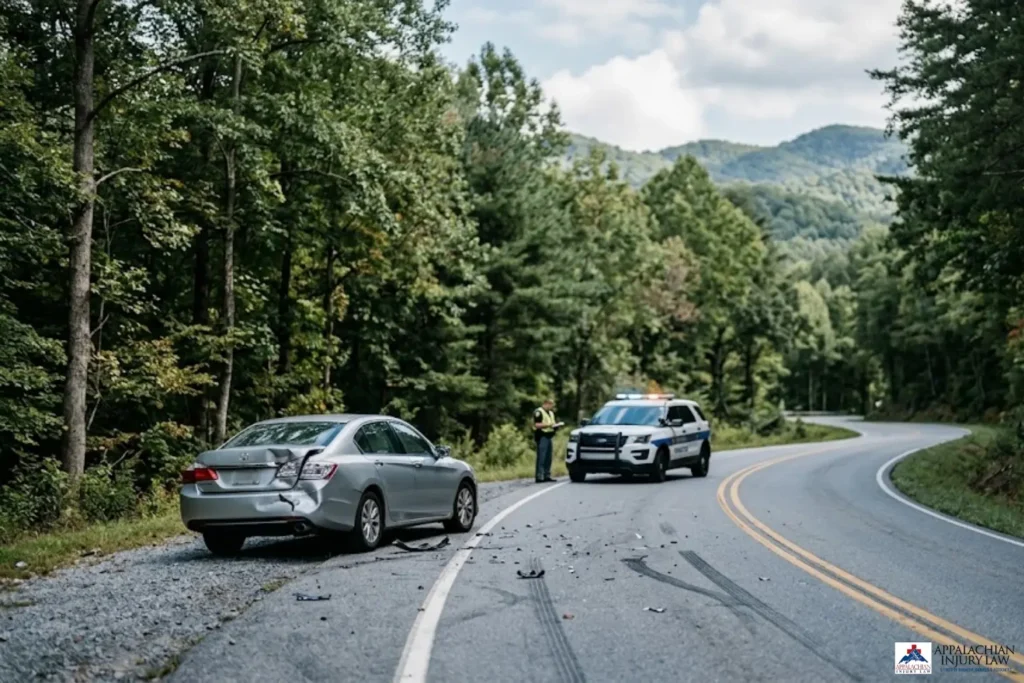
Tailgating Accidents on Narrow Rural Roads
A tailgating accident happens when a driver follows too closely to react in time. Narrow rural roads leave little room to avoid a rear-end collision. Sudden braking for a deer, pothole, or slow farm vehicle often triggers these crashes. Georgia law requires drivers to maintain a safe following distance at all times. A tailgating driver who causes a rear-end crash is typically found at fault. These accidents frequently cause whiplash, concussions, and other soft-tissue injuries. Documenting following distance and braking evidence strengthens this type of claim.
Appalachian Trail Accidents Involving Visitors and Traffic
An Appalachian Trail accident often involves distracted visitors near trailhead crossings. Hikers and cyclists share narrow shoulders with fast-moving vehicles near Springer Mountain. Tourist traffic at different times of the year contributes to congestion on roads that were never built for such heavy use. Rental cars and RVs not accustomed to the hills increase the risk. The accidents between vehicles and pedestrians near trail crossings can be disastrous. Local drivers should expect foot traffic near marked trailheads, especially during peak hiking season. Reduced speed near these crossings helps prevent this type of collision.
Steps To Take After a Rural Road Crash
Follow these steps immediately after a rural road crash to secure your well-being and the validity of your claim
- Call 911 and request a police and medical response.
- Leave the vehicle and go to a secure place if possible.
- Take pictures of the scene, the damaged vehicle, and the road.
- Document the weather, lighting conditions, and wildlife/debris present at the time of the accident.
- Obtain contact details from all the drivers and witnesses to the crash.
- Visit a doctor regardless of how small the injury
- Avoid discussing fault with insurance adjusters right away.
Rural Highway vs. Urban Highway Crash Factors
Rural crashes involve different risk factors than accidents on city streets. The table below compares conditions that affect crash severity and emergency response on a rural highway versus a typical urban highway in North Georgia.
| Factor | Rural Highway | Urban Highway |
|---|---|---|
| Average speed | Higher, often 55+ mph | Lower, frequently under 45 mph |
| Emergency response time | 15 to 30+ minutes | Usually under 10 minutes |
| Road lighting | Limited or none | Consistent street lighting |
| Common hazards | Wildlife, curves, gravel shoulders | Congestion, intersections |
| Cell service | Often limited or unreliable | Generally reliable |
When To Call a Car Accident Lawyer
A car accident lawyer becomes essential once injuries, disputed fault, or insurance delays arise. Rural crashes often involve limited witnesses and unclear property lines. Insurance adjusters could claim that the accident was due to rugged terrain rather than negligence. An experienced lawyer could obtain video footage from traffic cameras, weather information, and witness statements. Prompt action on the part of a lawyer would ensure the preservation of evidence before the road is cleared or repaired. Georgia’s statute of limitations generally gives injury victims two years to file a claim. Appalachian Injury Law has handled truck, motorcycle, and passenger vehicle wrecks throughout the North Georgia mountains for three decades.
Protect Your Rights After a North Georgia Rural Highway Crash
A rural highway crash can change your life within seconds, but the right steps protect your claim. Record the details of the scene, get medical attention, and avoid giving any recorded statement to insurance companies. Because of the mountainous region, limited cell service, and slow response times, a rural accident can be complicated. For more than 3 decades now, we at Appalachian Injury Law have been representing clients from North Georgia in their accidents. Our attorneys understand these roads and how local insurers evaluate claims. Call (706) 515-1995 or visit our Contact Us page for a free consultation. Don’t navigate a rural highway injury claim alone.
Frequently Asked Questions
Who is at fault in a mountain road accident caused by fog or low visibility?
If the driver did not reduce speed according to the condition of the road, they are considered negligent.
How long do I have to file a rural highway accident claim in Georgia?
Georgia’s statute of limitations, O.C.G.A. § 9-3-33, generally gives injury victims two years from the crash date to file suit.
Can I still recover damages if I was partly at fault for a tailgating accident?
Yes. Georgia’s modified comparative negligence rule allows recovery if you’re found less than 50 percent at fault.
Why do rural highway crashes tend to be more severe than city accidents?
Higher speeds, delayed emergency response, and limited road infrastructure increase injury severity on rural highways.
