





Georgia dog bite law holds an owner liable when they knew a dog was dangerous or ignored a leash ordinance. In this guide, you can read about the requirements for a lawsuit, the statute of limitations for filing a case, and when legal representation is recommended. You will be informed of Georgia’s modified one-bite rule, leash violation laws, and the actions taken by animal control after a dog bite. The two-year statute of limitations, provocation cases, and factors affecting a favorable settlement are included. Appalachian Injury Law represents dog bite victims throughout East Ellijay and the North Georgia mountains.
1. Georgia Follows a Modified “One Bite Rule”
The one-bite rule in Georgia does not provide full protection to the first offender, as most people might think. Under O.C.G.A. § 51-2-7, an owner is liable if they knew, or should have known, their dog had dangerous tendencies. The dog’s prior behavior, such as snarling, barking, or attacking, is sufficient proof without having to show that the dog actually bit anyone. This is referred to in law as “scienter,” which means the owner had notice of danger.
2. Leash Law Violations Can Shift Liability
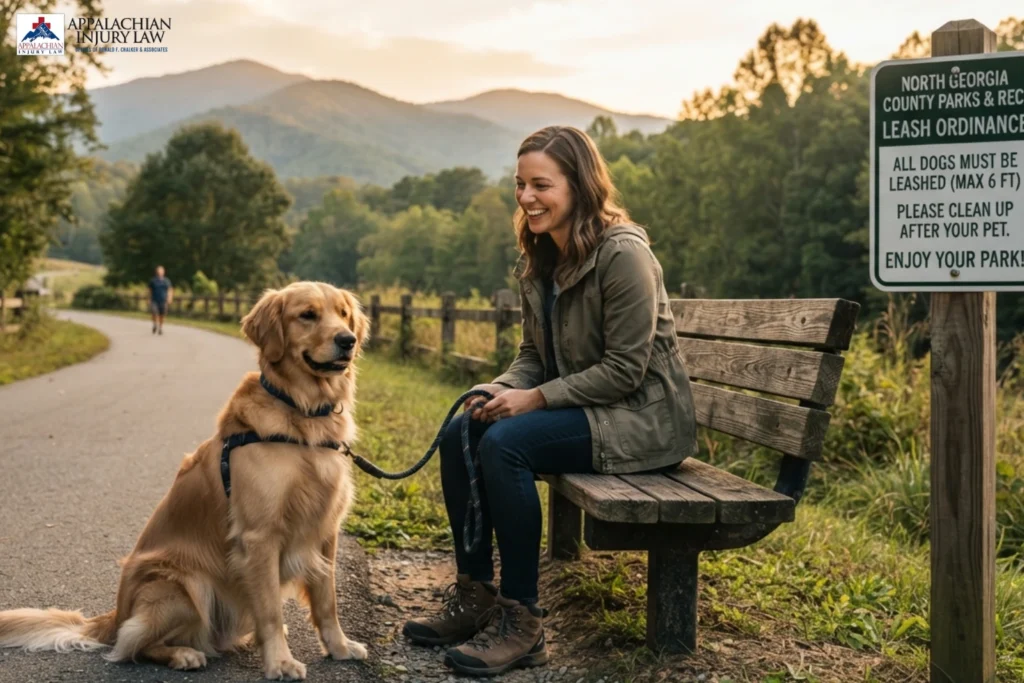
There is no leash law in Georgia at the statewide level; however, the leash law Georgia Ordinance can be applied to most cases in the state. The dog leash law in many towns and counties in North Georgia requires that all dogs be on a leash or under voice control while out in public. According to the O.C.G.A. § 51-2-7, the violation of leash law is enough evidence to show viciousness on the part of the animal. It means that it is unnecessary to prove that the dog bit anyone.
3. Georgia Animal Control Investigates Every Bite
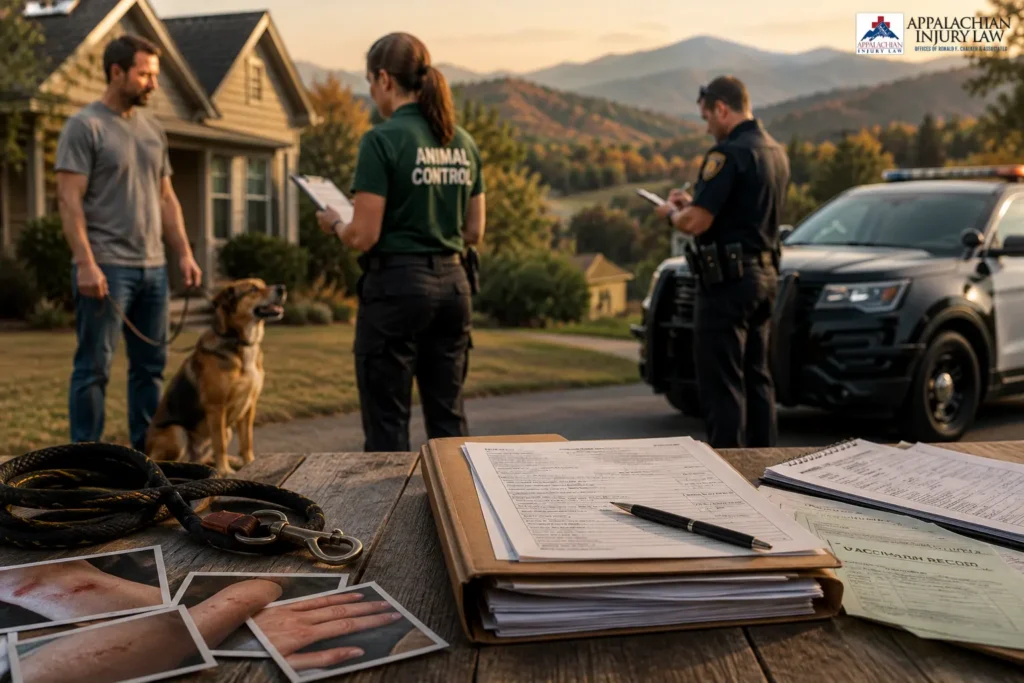
Georgia animal control agencies assume a critical position following any report of a dog bite. These officers conduct an investigation into the matter, examine the dog’s vaccination status, and may quarantine the dog for observation for rabies infection. The officer’s report details the location of the bite and the identity of the owner, along with any previous complaints against the dog owner. The victim needs to contact the animal control agency after visiting a doctor. This report becomes crucial for filing a liability lawsuit. Some rural counties, such as Gilmer County, lack adequate personnel for animal control.
4. Two Paths to Proving Georgia Dog Bite Liability
Establishing Georgia dog bite liability usually involves one of the following legal approaches. First, the injured party could prove the owner was aware of the dog’s dangerous nature and negligently handled it. Second, the injured party might prove that the dog was not leashed in the area where a leash is legally required. For either approach to be successful, the plaintiff should be able to prove that they did not provoke the attack. Children under 13 are presumed not to provoke a dog attack under the law.
| Legal Path | What You Must Prove | Typical Evidence |
| Vicious Propensity + Knowledge | Owner knew, or should have known, the dog was dangerous | Prior bite reports, neighbor complaints, veterinary records |
| Leash Ordinance Violation | Dog was off-leash or not at heel as local law required | Animal control citation, witness statements, county ordinance text |
5. You Have Two Years to File a Claim
There is a statute of limitations in Georgia that ensures a strict deadline for dog bite claims. As per O.C.G.A. § 9-3-33, all personal injury claims have to be brought to court in two years after the incident. Failure to meet this deadline would make the claim unenforceable regardless of the nature of the injury. For minors, the deadline usually runs until age 20 because the clock stops at 18.
6. Provocation and Comparative Fault Can Reduce Compensation
The Georgia dog bite laws place restrictions on the amount that can be recovered from an incident where the victim played a part in causing the attack. The dog owner cannot be held responsible if the victim provoked the dog using teasing, hitting, or threatening actions. Georgia follows a modified comparative negligence rule subject to a 50 percent bar. This means that the victim can recover nothing if they are more than 50 percent responsible for the incident.
For more on this, see our guide on when to hire a dog bite attorney and our page explaining who can be held liable in a dog bite case.
Protect Your Rights Under Georgia Dog Bite Laws
Understanding Georgia dog bite laws gives victims a real advantage when insurance companies push back. Knowing the one-bite standard, leash ordinance rules, and the two-year filing deadline helps you protect your claim from day one. Our step-by-step personal injury claim process and our East Ellijay dog bite representation page both explain what happens next. Appalachian Injury Law offers free consultations for dog bite victims across North Georgia. Call (706) 515-1995 or visit our Contact Us page to discuss your case today.
Frequently Asked Questions
Does Georgia have a one-bite rule for dogs?
Georgia has a modified one-bite rule. An owner can still be liable for a first bite if they knew or should have known that the dog had dangerous tendencies, or if the dog violated a local leash ordinance at the time of the attack.
What is the statute of limitations for a dog bite claim in Georgia?
In Georgia, dog bite victims have two years from the date of the incident in which to bring a personal injury suit, according to O.C.G.A. § 9-3-33. For minors, that deadline ends on their 20th birthday.
Can I sue my neighbor if their dog bites me in Georgia?
Yes, if you can show that the owner of the dog knew that it was dangerous or that the dog violated a local leash law when the bite occurred, and that you did not provoke the attack.
