






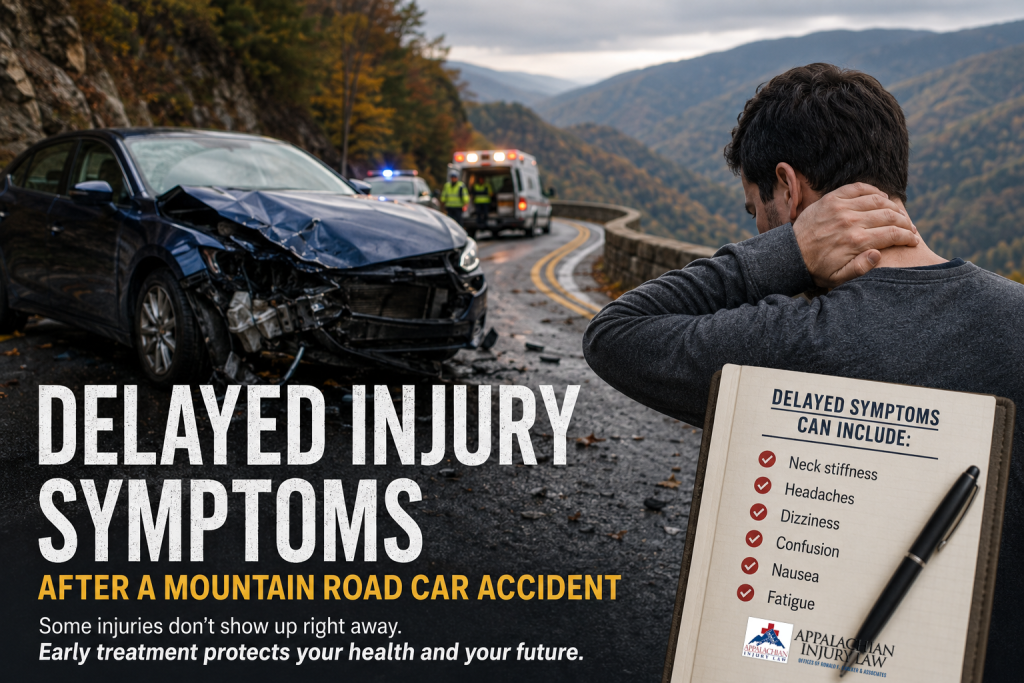
Delayed injury symptoms after a mountain road car accident can appear hours or even days after a crash. Many drivers feel fine immediately after an accident on North Georgia’s winding roads. However, the body often masks pain during stressful situations.
Mountain roads around Ellijay and across North Georgia pose unique driving hazards. Sharp curves, steep grades, and changing weather conditions increase the risk of accidents. Even lower-speed crashes can cause significant physical trauma.
Many accident victims dismiss soreness as temporary discomfort. Unfortunately, some injuries worsen without prompt medical care. Early evaluation can prevent long-term complications and strengthen injury claims.
According to the CDC brain injury resource, brain injuries may not show immediate symptoms after a collision. This makes post-accident monitoring extremely important.
Why Delayed Symptoms Happen After Car Accidents
The body releases adrenaline immediately after a crash. Adrenaline temporarily blocks pain signals and creates a false sense of wellness. As stress hormones fade, symptoms begin appearing gradually.
This issue commonly affects victims involved in East Ellijay car accident claims. Mountain crashes often involve sudden impact forces that strain muscles, ligaments, and nerves.
Soft tissue injuries especially develop slowly. Swelling and inflammation increase over several days. As a result, victims may later notice stiffness, headaches, or mobility problems.
Additionally, emotional trauma can delay physical recovery. Anxiety and shock often distract people from recognizing serious pain signals after collisions.
Common Whiplash Symptoms are Delayed After a Crash
One of the most common injuries involves the neck and upper spine. Many victims experience whiplash symptoms delayed by several days after an accident.
Whiplash occurs when the head snaps violently forward and backward. Mountain road accidents often cause this motion due to abrupt braking and sharp impacts.
In many situations, victims initially believe they escaped serious harm because adrenaline masks pain immediately after the collision. However, inflammation and muscle strain often increase gradually over time.
Simple daily activities like driving, sleeping, or turning the head may suddenly become painful days later.
Symptoms may include:
- Neck stiffness
- Shoulder pain
- Reduced range of motion
- Headaches
- Tingling in the arms
- Fatigue
Persistent neck pain after accident should never be ignored. Untreated whiplash may lead to chronic discomfort and long-term mobility issues.
Many victims also experience stiffness that spreads into the shoulders and upper back over time.
Without proper treatment, ongoing pain can interfere with work responsibilities, sleep quality, and normal daily movement. Some individuals even struggle with concentration and fatigue as physical discomfort continues to worsen during recovery.
Recognizing a Concussion after Car Accident
A concussion after car accident may seem minor initially. However, brain injuries can become dangerous without medical evaluation.
Concussions occur when the brain moves inside the skull after a sudden impact. Even without direct head contact, violent movement may trigger brain trauma.
Symptoms often appear gradually and may include:
- Confusion
- Dizziness
- Memory problems
- Nausea
- Light sensitivity
- Difficulty concentrating
Some victims continue normal activities while symptoms worsen silently. This delay often increases medical risks and recovery time.
Following a collision, persistent headaches, fatigue, and cognitive difficulties may worsen without prompt medical evaluation and proper neurological treatment.
In difficult situations, victims may develop more serious traumatic brain injury symptoms requiring long-term treatment and rehabilitation. These conditions may affect memory, balance, speech, emotional stability, and overall quality of life for months or even years after the collision.
Understanding Hidden Injuries After Crash Situations
Some injuries may not produce immediate pain because the body remains under stress after a traumatic event.
As inflammation increases over time, symptoms can gradually become more noticeable and medically concerning for accident victims.
These hidden injuries after crash incidents can involve internal bleeding, organ damage, or spinal injuries.
Internal injuries are especially dangerous because symptoms develop slowly. Victims may notice abdominal pain, deep bruising, or dizziness later.
Mountain crashes can also create spinal compression injuries. Uneven terrain and rollover accidents increase strain on the back and spine.
Appalachian Injury Law also handles cases involving Dalton truck accident claims, where delayed trauma frequently affects recovery outcomes.
Prompt imaging tests and medical evaluations help detect these injuries early. Waiting too long may worsen physical damage and complicate insurance claims.
Emotional Trauma Can Also Be Delayed

Not all injuries are physical. Emotional trauma frequently develops after dangerous crashes on isolated mountain roads.
Victims may initially focus on vehicle damage or emergency response. Emotional symptoms often emerge days later once the shock fades.
Common emotional symptoms include:
- Sleep problems
- Anxiety while driving
- Panic attacks
- Mood swings
- Depression
These conditions can affect relationships, work performance, and daily life. Mental health treatment may become an important part of overall recovery.
Georgia law may allow compensation for emotional suffering connected to accident injuries. Documentation from healthcare professionals significantly strengthens these claims.
Why Immediate Medical Care Matters
Many victims avoid medical care because symptoms seem minor initially. Unfortunately, delayed treatment creates problems for both health and legal claims.
Insurance companies often question injuries reported days after accidents. They may argue that the condition developed elsewhere or was unrelated to the crash.
Medical records provide essential evidence linking the collision to the symptoms. Doctors can also identify worsening injuries before complications become severe.
Victims dealing with serious Georgia injury compensation benefit from detailed treatment documentation. Early care demonstrates that injuries were taken seriously from the beginning.
Even if emergency responders clear you at the scene, follow-up appointments remain important. Symptoms evolve, especially after traumatic impacts.
How Mountain Roads Increase Injury Risks
North Georgia mountain roads present conditions different from those of typical highway accidents. Curves, steep drops, and narrow lanes increase the severity of collisions.
Drivers often brace for impact awkwardly during mountain crashes. This tension increases muscle strain and spinal stress during collisions.
Rollover accidents also occur more frequently on rural mountain roads—these crashes commonly cause severe Georgia accident injuries involving the head, neck, and spine.
Additionally, emergency response times may take longer in remote locations. Delayed treatment sometimes worsens injuries before victims receive proper care.
Understanding these unique risks helps accident victims recognize why symptoms appear later.
Protect Your Health and Your Future After a Crash
Delayed symptoms can become serious medical problems without proper attention. Ignoring pain after a crash may place both your recovery and financial future at risk.
Appalachian Injury Law understands how Georgia accident injuries affect victims throughout North Georgia. Our legal team helps clients pursue compensation for medical costs, lost income, and long-term suffering.
If you notice delayed injury symptoms after a mountain road car accident, seek medical care immediately. Then, speak with Appalachian Injury Law through our contact us page or call (706) 515-1995 for guidance about your legal options.
