




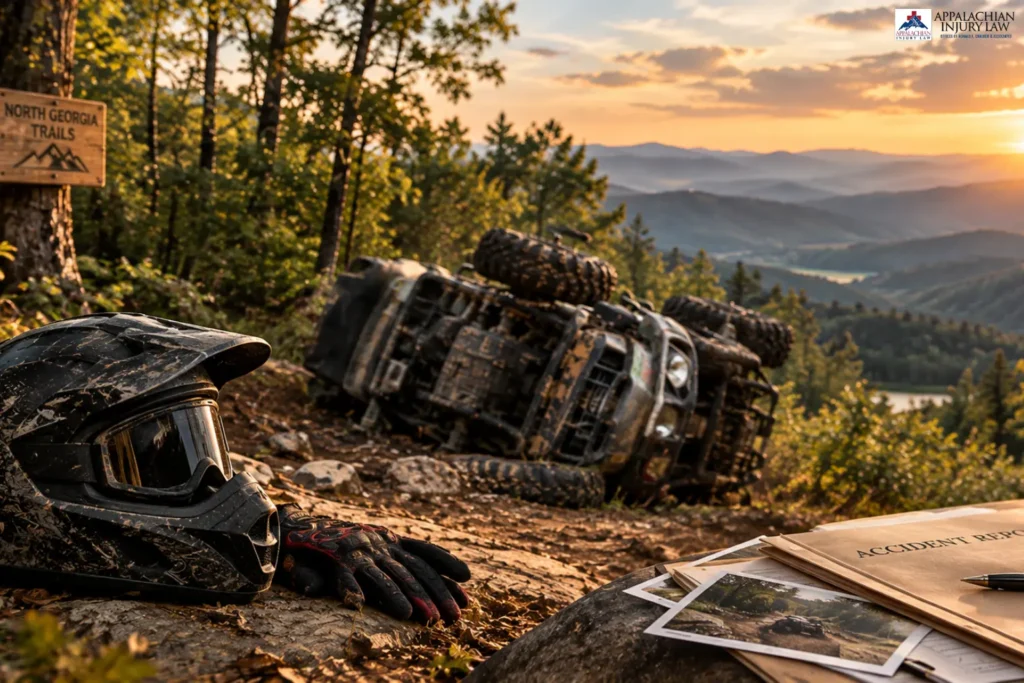
ATV accident victims in North Georgia often face steep medical bills and confusing insurance questions right away. The state of Georgia deals with ATVs in a different manner than it does with cars, and that affects many things from liability to insurance claims and deadlines. Riders near Ellijay, Blue Ridge, and the Chattahoochee National Forest face rollovers, collisions, and hidden mountain terrain hazards. This guide explains Georgia’s ATV laws, common accident causes, and the steps victims should take after a crash. You’ll also learn how liability differs between private land, public trails, and dealership defects.
Understanding ATV Accidents in North Georgia
An ATV accident is the act of an all-terrain vehicle overturning, hitting, or throwing off the driver when operating it. According to Georgia law, an ATV refers to any straddle seat motorized vehicle that has four tires with low pressure and handlebars. The rough, forested terrain of North Georgia increases the likelihood of accidents such as rollovers and crashes.
Approximately 100,000 ATV-related injuries require emergency room treatment each year, according to the Consumer Product Safety Commission. Both riders and those on the same trail can get badly hurt in an accident. Injuries typically involve bone fractures, spine injuries, and head injuries.
Common Causes of ATV Accidents on North Georgia Trails
These accidents can be attributed to some common causes:
- Rolling over on steep surfaces or gravel surfaces
- Speeding on unknown trails or those that lack signage
- Passengers being carried by single-person ATVs
- Lack of helmets or protective clothing
- Design flaws or mechanical flaws
- Use of private property without consent of the owner
- Intoxication
Similar negligence patterns show up in motorcycle accident claims, where speed and visibility play a major role.
ATV Trails North Georgia Riders Use Most
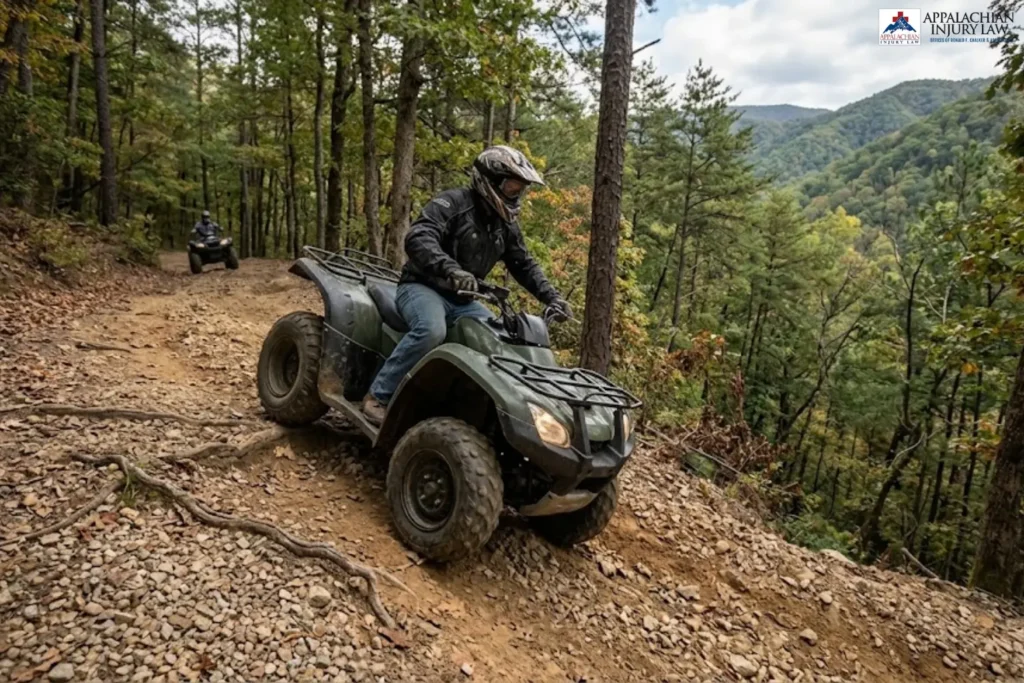
Most frequently used ATV trails in North Georgia can be found in Chattahoochee Oconee National Forest. The Whissenhunt OHV Trail, located near Dahlonega, stretches for 11 miles for ATVs less than 50 inches wide. The Houston Valley OHV Trails, located near Dalton County, provide about 25 miles of trails for ATVs and motorcycles. All these trails, as well as those around Gilmer County, are closed after rain to prevent erosion. ATV users must use only designated trails, in accordance with trail width and permitting requirements. Straying off-trail increases collision risk and may violate U.S. Forest Service regulations.
Georgia ATV Laws Every Rider Should Know
In Georgia, ATV laws view off-road vehicles in a way different from regular motor vehicles. An ATV is defined in Georgia ATV laws in the Off-Road Vehicle Act, O.C.G.A. Title 40, Chapter 7, as a straddle-seated, low-pressure tire vehicle. Operating ATVs on public streets and highways is prohibited, except for some allowable uses on farms. Anyone under 16 must wear a certified helmet. Every ATV needs working brakes, a spark arrestor, and a noise-limiting muffler. Local governments and land managers may add their own trail-specific rules. Understanding these Georgia ATV laws helps establish whether a violation contributed to your crash.
Liability for an ATV Accident on Private Property
An ATV accident on private property often raises different liability questions than a trail crash. In Georgia, it is against the law to operate an ATV on someone else’s land without written permission to do so. The owner of the land that invites people to ride their ATVs may owe a duty to warn of dangers unknown to the rider. However, trespassers have a hard time recovering compensation. Before pursuing a claim, you must determine permission, notice, and land classification.
ATV Rollover Accidents on Mountain Terrain
An ATV rollover accident is one of the most frequent and dangerous crash types nationwide. ATVs have a high center of gravity, making them more prone to tipping on slopes. The steep terrain and gravel of North Georgia make such accidents even more common. Passengers on ATVs, which are meant for only one person, are especially vulnerable in a rollover. Injuries due to crushing, spinal injury, and brain injury are common consequences of such an accident. Manufacturer design defects can also contribute to rollover instability on certain models.
Recreational Vehicle Accidents vs. Car Accident Claims
A recreational vehicle accident claim follows different insurance and liability rules than a car crash. All-terrain vehicles are not normally expected to have Georgia automobile insurance or Georgia vehicle registration. The state’s standard motor-vehicle regulations do not apply to off-road vehicles. The claim will be made based on the homeowner’s insurance, liability, or assets of the party at fault. The table below outlines key differences between ATV and standard vehicle claims.
| Factor | ATV Accident Claim | Auto Accident Claim |
|---|---|---|
| State Registration Required | No | Yes |
| Allowed on Public Roads | Generally prohibited | Yes, with valid license |
| Primary Insurance Source | Homeowner’s, personal, or product liability | Auto liability insurance |
| Common Liability Theories | Negligence, premises liability, product defect | Negligence, comparative fault |
| Personal Injury Filing Deadline | 2 years from injury | 2 years from injury |
| Helmet Requirement | Required for riders under 16 | Not applicable |
Parties That Can Be Held Liable
An ATV accident lawyer can help determine who is legally responsible for your injuries. Depending on the facts, liability may fall on more than one party:
- The at-fault rider or operator
- A property owner who failed to warn of hazards
- The ATV manufacturer or dealer, for defective products
- A rental company that supplied faulty equipment
- A guide or tour operator overseeing the ride
Get Help After an ATV Accident in North Georgia
An ATV accident can leave you facing mounting medical bills and unclear legal options. Georgia ATV laws, along with private property laws, create challenges when you try to pursue a claim. For over thirty years, Appalachian Injury Law has been representing accident victims in North Georgia. We have experience looking into trail conditions, property owner liability, and manufacturing defects to help build your claim. We take cases on contingency, and you will only owe us if we get results. Call (706) 515-1995 or visit our Contact Us page for a free consultation today.
Frequently Asked Questions
Can I sue if I was injured on someone else’s property while riding an ATV?
Yes, you might have grounds to bring suit if you did not get an invitation or if the landowner was aware of the danger. Georgia has a statute requiring written permission to use an all-terrain vehicle on lands that you do not own. If the landowner invited you and did not warn you of the danger, he could be held responsible for your injury. However, if you were trespassing, you would face great difficulty bringing a claim. An attorney can review the property arrangement and any prior incidents on the land.
Does Georgia require insurance for ATVs?
No, Georgia does not require ATV owners to carry state-mandated liability insurance as it does for cars. This means recovery after a crash often depends on the at-fault party’s homeowner’s policy, personal assets, or a product liability claim against a manufacturer. Because coverage isn’t standardized, ATV accident claims can be more complicated to resolve than typical auto accident claims. Riders should still consider optional coverage where available for their own protection.
Can a passenger on an ATV file an injury claim?
Yes, a passenger injured on an ATV can file a claim, even against the driver of the vehicle they were riding on. Many ATVs are designed for a single rider, and adding a passenger increases rollover and ejection risk significantly. If the operator’s negligence contributed to the crash, the passenger may recover damages from that driver’s liability coverage or personal assets. Passengers may also have claims against a landowner or manufacturer depending on the cause of the crash.
